
Last updated November 25, 2026
 Sweep & inspection
 Caps & crowns
 Flue relining
 Masonry repair
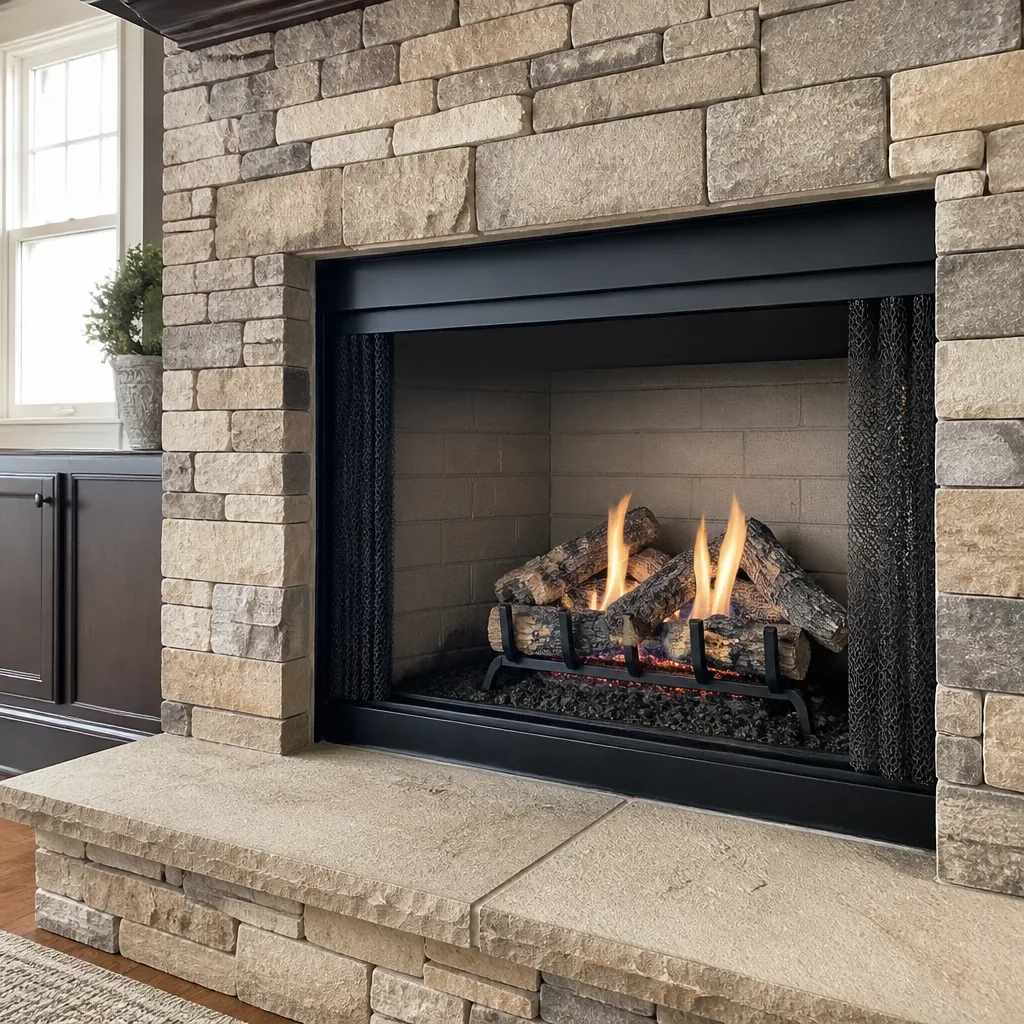 Gas fireplace service
Level 1 sweep and inspection to the NFPA 211 annual standard - flue, crown, cap, and flashing checked and photographed
Chimney sweep logs do not sweep chimneys. They loosen some creosote - which then falls where a brush and vacuum still have to collect it.
Chimney Cleaning Warning Signs: A Placentia Homeowner’s Reference Guide
White staining on a chimney exterior usually gets filed under “weathering” and forgotten. It isn’t weathering. That crust is efflorescence, and it means water is actively moving through the masonry right now. By the time the stain is visible on the outside of the chase, the inside of the flue system has typically been damp for months, and the damage underneath is older than the stain suggests. That gap between what a symptom looks like and what it actually means is where most chimney problems get missed. This guide pairs each visible warning sign with the mechanical condition behind it, separates the immediate hazards from the slow deterioration trends, and explains how Placentia conditions shape what you’ll see. You’ll finish knowing what warrants a call today and what can safely wait a season.
Quick Answer
The chimney warning signs that need attention now are smoke rolling back into the room, a strong creosote or soot smell that won’t clear, rust stains or dark streaking on the chase, and visible cracking in the crown or flue tiles. The signs that indicate a real problem but usually have a window of weeks to months are efflorescence, spalling brick, a missing or loose cap, and soot patterns that look uneven in the firebox. Any sign paired with a carbon monoxide alarm going off is a call-today situation with no exceptions.
Styles & brands we work with
- Sweep & inspection
- Caps & crowns
- Flue relining
- Masonry repair
- Gas fireplace service
Table of Contents
- The Symptom-to-Cause Reference: What Each Sign Actually Means
- Immediate Hazards vs. Deterioration Trends: Which Signs Can Wait
- How Placentia Conditions Produce Different Warning Signs
- Warning Signs Inside the Home: Draft, Odor, and Soot Patterns
- How to Document What You’re Seeing Before You Call
- Crown Cracking and Cap Damage: The Water-Entry Chain
- Smoke Rollback and Draft Failure: Reading the Firebox
- What a Professional Inspection Actually Checks
The Symptom-to-Cause Reference: What Each Sign Actually Means
Most homeowners can describe what they see. Fewer can say what it indicates, and that gap is where small issues become structural ones. Here’s the mapping we walk through on inspections in Placentia, written so you can use it from the ground looking up.
- White or gray crusty staining on the exterior masonry (efflorescence). Water is dissolving salts out of the brick or mortar and depositing them on the surface as it evaporates. The stain is the visible symptom; the water path behind it is the problem. Efflorescence points to a failed crown, failed flashing, or a missing cap letting rain straight into the flue.
- Flaking, crumbling, or pitted brick faces (spalling). Water has entered the masonry and expanded as it dried, or a freeze event is not required for this in a mild-winter climate. The brick face is physically breaking apart. Spalling is a later stage than efflorescence, meaning the water intrusion has been ongoing long enough to damage the brick body.
- Smoke rolling back into the room. A draft failure. Could be a cold flue, a blockage, a flue that’s undersized for the firebox opening, or negative pressure from the house itself. Sometimes a simple issue, sometimes a sign the liner is compromised enough that the flue no longer draws.
- Rust stains or orange streaks on the chase or firebox. The chimney’s metal components are corroding, and the moisture causing it is coming from somewhere. Rust on the chase usually means the crown or cap has been failing long enough to wet the steel; rust inside the firebox often points to a damaged damper or firebox assembly.
- Visible cracking in the crown. The crown is the concrete cap at the very top of the chimney. Cracks mean water gets into the masonry below. Even a hairline crack expands and contracts seasonally, so it gets wider over time.
- Dark vertical streaking on the exterior. Soot or creosote is escaping the flue and staining the outside. The chimney is leaking combustion byproducts where it shouldn’t, which means an internal gap.
That mapping is the core of this guide. Everything below expands on the categories, the timing, and the local factors that change what these signs look like on a Placentia roof.
Immediate Hazards vs. Deterioration Trends: Which Signs Can Wait
The single most useful distinction in chimney maintenance is the difference between a hazard and a trend. Some signs indicate an active fire or carbon monoxide risk. Others indicate a real problem that will get worse but won’t hurt anyone next week. Getting this distinction wrong in either direction is the usual mistake: homeowners panic over efflorescence and ignore rust streaks, when it should be the other way around.
Immediate hazard signs
- Smoke rolling into the room on a normal fire. The flue isn’t venting combustion gases where they should go. This can mean blockage, a collapsed liner section, or severe negative pressure. It needs to be diagnosed before the next fire.
- Any carbon monoxide alarm activation with the fireplace in use or recently used. Get everyone out, ventilate the house, and call the fire department or your gas utility before calling for service. A CO reading confirms the venting system has failed somewhere.
- A strong, sustained creosote smell in the house, especially in warm weather. Creosote is liquid when hot and solid when cool. A smell in spring or summer means deposits are present, and in a hot, dry climate like ours the smell is the only signal you get that a chamber has built up enough deposit to be a fire risk. A chimney fire risk is not something to leave for “sometime.”
- Visible flames or glowing at the top of the chimney or coming out of the crown. A chimney fire may be actively burning. Get out and call 911.
- Any sign the firebox or damper is letting exhaust past the throat of the fireplace. A damaged damper can be closed or open when it should be the opposite, and exhaust goes back into the room instead of up the flue.
Deterioration trends (weeks to months)
- Efflorescence in its early stage. A problem worth fixing, but not a today problem. The water path needs to be diagnosed and closed off, ideally before the next rainy season.
- Cosmetic but stable crown cracking. Cracks that aren’t deepening and aren’t accompanied by brick damage can typically be sealed within the season. Cracks that are widening or letting water in are a different story and should be addressed sooner.
- A missing or loose chimney cap. An open cap lets rain, animals, and debris in. Getting it back on is the priority, and a Placentia homeowner’s timeline here is measured in weeks, not months, because summer heat and the first autumn rain make the difference quickly.
- Uneven soot patterns or visible buildup in the firebox. Indicates the draft or burn pattern has changed and a flue evaluation is due before the next heating season.
- Minor spalling on a few brick faces with no exposed underlayment. Needs repair, but the masonry hasn’t failed structurally yet. Plan the repair before it gets worse.
How Placentia Conditions Produce Different Warning Signs
National chimney guides are usually written for places with hard freezes, snow loads, and long heating seasons. Placentia runs a different schedule. Mild winters, hot dry summers, and a housing mix of mid-century single-story homes and newer construction mean the warning signs show up in a different order and at different times of year than the guides suggest.
Summer heat expands and contracts the masonry. Our afternoons hit the upper 90s while nights cool into the 60s, and that daily temperature swing is a lot of movement for brick and mortar to absorb over a summer. Crown cracks that look stable in spring often widen by the end of August. That’s why we treat late summer as a good time to have the crown and cap looked at, before the first rain of autumn tests them.
Low humidity is gentle on masonry but hard on wood and metal. Dry air pulls moisture quickly out of any wet masonry, which means efflorescence appears faster after a leak starts. The upside: water damage progresses slowly here compared with wetter climates, so there’s usually a real window to plan a repair rather than just react to one. The flip side is that rust and corrosion inside the chimney is easier to miss because there isn’t a wet-season signal to remind you.
Eucalyptus and local wood smoke is different. Eucalyptus, olive, and other locally common firewood species burn hot and can leave a harder, denser creosote deposit than the softer firewoods in national guides. Deposits from these woods also tend to smell stronger in warm weather, which is one reason the “creosote smell in summer” signal matters more here. If you burn eucalyptus, treat the annual inspection as the baseline, not a suggestion. The chimney sweep is what removes deposits the smell is telling you about.
Housing stock matters. A lot of Placentia homes are mid-century builds with masonry fireplaces that haven’t been relined. Original clay-tile flues from that era have been through enough thermal cycles to have developed hairline cracks, and the warning sign for a cracked flue tile is often nothing more than a slightly different draft than you remember. In those homes, we treat the first inspection as a one-time evaluation of the entire system, not just the firebox.
The climate doesn’t change what a symptom means, but it does change the timing. That timing is what most national guides get wrong for Placentia.
Warning Signs Inside the Home: Draft, Odor, and Soot Patterns
Some of the most useful warning signs never show up on the exterior of the chimney. They show up in how the fireplace behaves, and a homeowner who knows what to look for can describe the symptom precisely enough to make the diagnosis faster.
Draft behavior
- Hard to start a fire, or the fire smokes heavily for the first few minutes. A cold flue is normal. A flue that never establishes draft, or that reverses once the house warms up, is not. Draft reversal usually points to a flue restriction or a pressure issue in the home.
- Smoke drifts out of the fireplace when a bathroom fan, kitchen hood, or dryer runs. The house is competing with the chimney for air. This is often a “whole-house” diagnosis rather than a chimney-only one, but the chimney side needs to be verified first.
- Smoke that enters one side of the firebox and exits the other. A cross-draft inside the firebox, usually caused by a warped or misaligned damper or by the firebox being the wrong size for the flue.
- Draft that used to be fine and now isn’t. This is the signal that matters most. Something changed inside the flue, and a change in draft is the most reliable in-home signal of a liner or deposit issue.
Odor
A chimney should smell like a chimney when it’s cold and like very little when there’s no fire. A persistent smokey, acrid, or creosote smell when the fireplace is not in use is a warning sign. In a mild climate, the chimney smell is often the only signal a homeowner gets that deposits have accumulated, because we don’t have the “first cold snap” moment that reminds people to look. If the smell is strong in the summer, treat it as a sign the chamber needs evaluation before the next burn season.
Soot patterns in the firebox
A clean, even firebox blackens uniformly with use. Uneven patterns point to specific conditions: heavy buildup on one side only suggests the fire is burning unevenly, possibly from a draft problem. Heavy black streaks on the back wall with less on the sidewalls often accompany draft restriction. Soot that reaches the damper assembly rather than staying in the firebox can indicate the flue is pulling byproducts through parts of the system it shouldn’t. A technician reads these patterns alongside the flue interior, because the firebox and the flue should tell the same story. If they don’t, that’s a clue something has changed inside.
How to Document What You’re Seeing Before You Call
An inspection that starts with a clear description of what you’ve noticed goes faster, and the recommendation at the end is more precise. You don’t need to diagnose the problem. You just need to record it.
- Photograph from the ground. Stand back far enough that the whole chimney and the roof line around it are in frame. Take one straight-on photo of each side that’s visible from the ground, plus a close-up of any crack, stain, or missing part. Photograph in the morning or late afternoon when the sun isn’t washing out the color differences that make efflorescence and rust visible.
- Photograph the firebox and damper. With the fireplace cold and no fire in it, take photos of the interior walls, the damper, and the area just above the damper. Turn on the room lights and use a flashlight if needed. Don’t reach into the firebox.
- Describe the draft in plain language. “Smoke rolls into the room when I first light it, then clears,” or “It drafts fine in the morning and poorly after the furnace runs,” are both useful. Note whether the behavior is new or long-standing.
- Record the smell and when it’s strongest. Time of year, weather, whether the fireplace was recently used, and whether the smell gets stronger in the summer are all relevant to the diagnosis.
- Note the last time the chimney was swept or inspected. You don’t need a receipt, just an approximate year and whether it was a sweep or an inspection.
- List any recent changes inside the house. A new furnace, a new kitchen exhaust hood, a tighter weatherstripping, a remodel that enclosed the fireplace – all of these can change how the house interacts with the chimney.
- Note any carbon monoxide alarm events, even short ones. When it went off, whether the fireplace or furnace was running, and whether it self-cleared. Don’t test the alarm or try to reproduce the event.
Send the photos and notes when you call. That description is what lets the technician tell whether the visit is a routine inspection or whether it needs to be scheduled with an eye on the fire risk. Placentia Chimney Sweep can work with your insurer, and the photo record you’ve made is often the paperwork an insurance claim needs if the damage turns out to be covered.
Crown Cracking and Cap Damage: The Water-Entry Chain
The crown is your chimney’s first line of defense against water damage. It’s the concrete slab at the very top of the chimney that sheds rain away from the flue opening and the masonry below. The cap sits over the flue itself and does a similar job for the flue interior. Both are small components with outsized responsibility, which is why we treat crown and cap work as core maintenance rather than an add-on to a sweep.
The chain of events here is predictable. A crown cracks, or a cap goes missing or gets bent. Rain enters the masonry or the flue directly. The masonry wicks water inward, and the flue interior gets wet. Water in the flue damages the liner, weakens the mortar joints, and eventually works down into the firebox and damper. By the time the homeowner sees efflorescence on the chase, the chain has usually been running for a while, and the visible stain lags the actual damage.
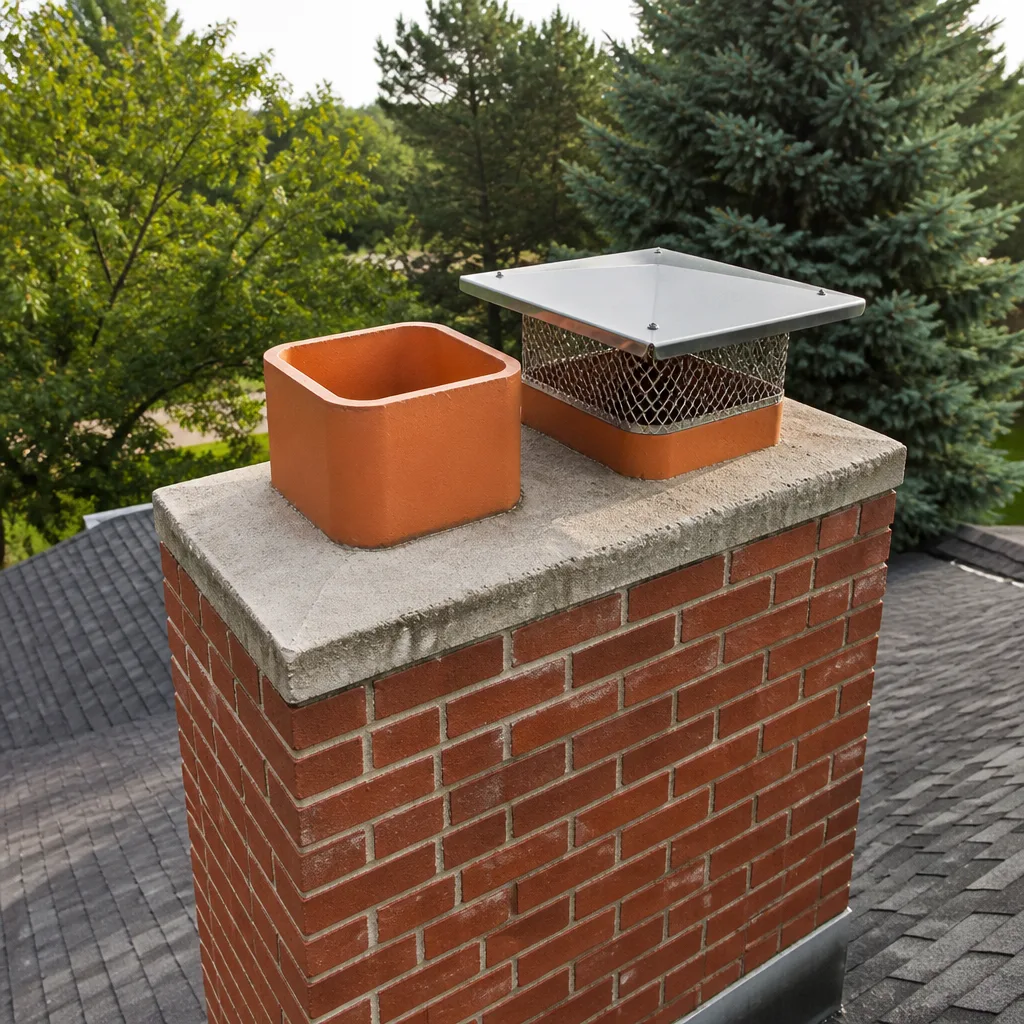
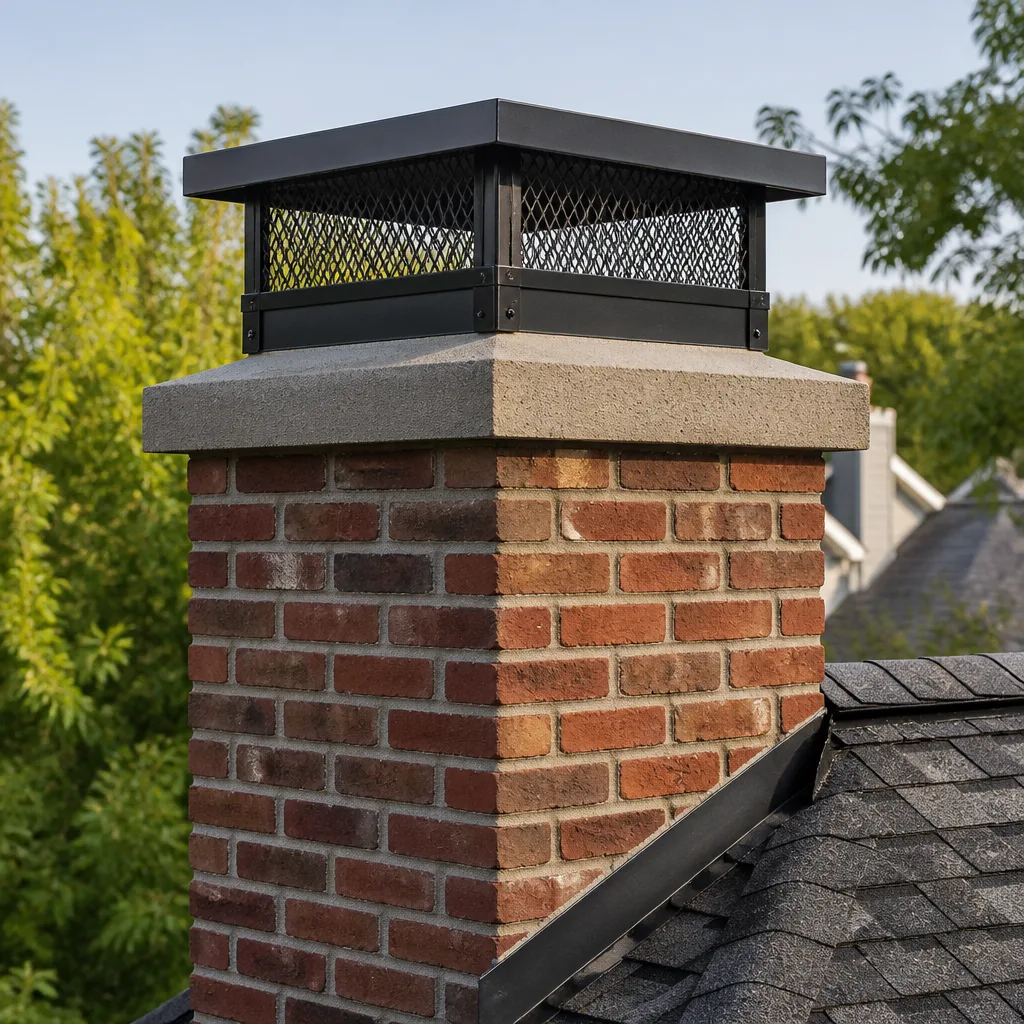
That’s why we walk the crown and cap as a unit. Cracks that are more than hairline need to be filled properly with a material that moves with the masonry, not just caulked. Caps need to be sized and attached correctly so the cap isn’t the next thing to go. And when the efflorescence is already present, the crown repair is the first step, because closing the water path is what stops the chain. Caps and crowns are where preventative chimney maintenance actually happens in a climate like Placentia’s, where we don’t get the seasonal freeze that reminds people to look.
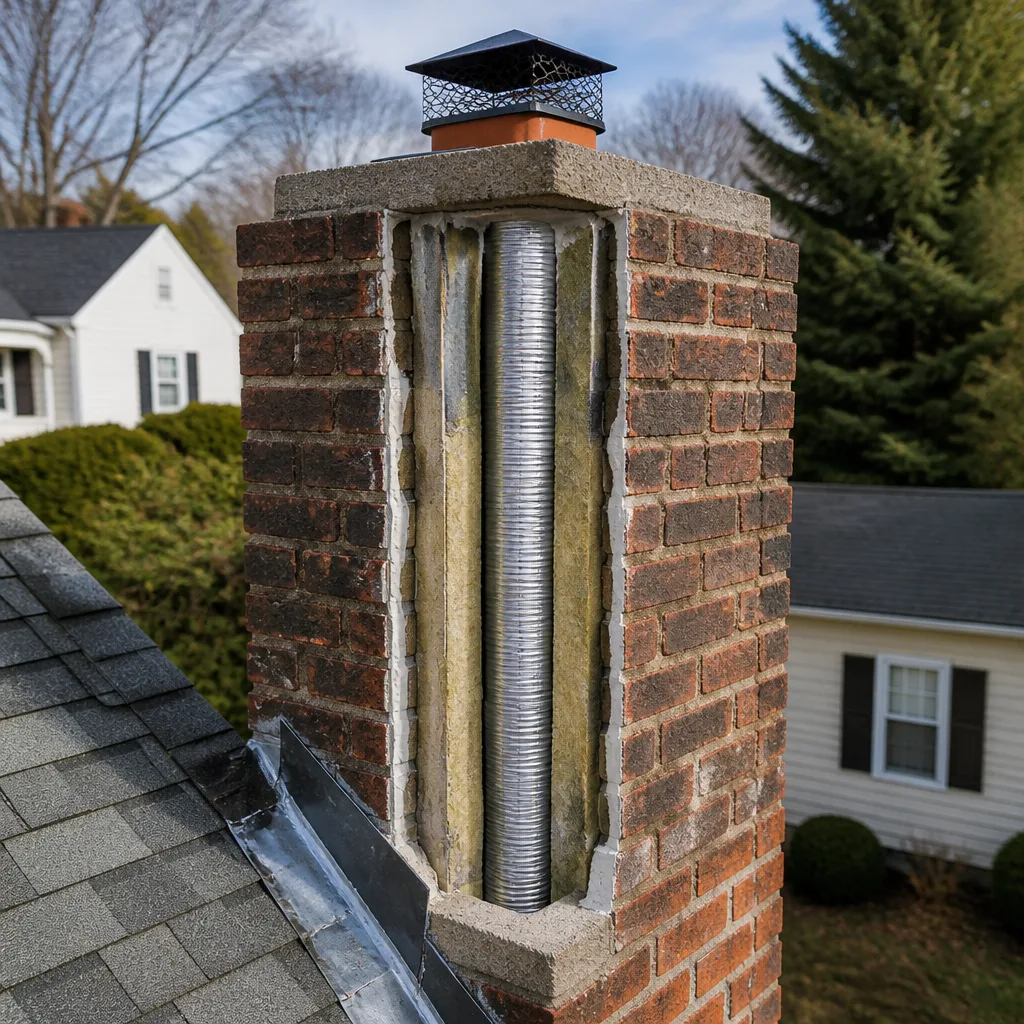
If the crown cracks have already let water reach the flue liner, the liner damage needs to be evaluated before the crown is closed up. HeatShield ceramic flue repair is an option for some liner deficiencies short of full replacement, and DuraFlex stainless flexible liner systems are the trade-grade answer when the liner needs to be replaced. Either way, the decision should follow the camera inspection, not come before it.
Smoke Rollback and Draft Failure: Reading the Firebox
Smoke rollback is the warning sign that most clearly separates “call now” from “call when you can.” Smoke that rolls into the room on start-up and clears within a minute or two is a cold flue doing its job slowly. Smoke that rolls back continuously, escapes when the fireplace isn’t the only appliance running, or gets worse over time is a sign something in the venting system has changed.
The mechanical causes of rollback are limited, and each points to a different repair:
- Restriction in the flue. Blockage from creosote deposit, a nesting animal, a collapsed liner section, or debris. The firebrick is drawing heat and producing smoke faster than the restricted flue can vent it.
- A flue too small for the firebox opening. The firebox opening is too large relative to the flue size, or the chimney height is too short for the flue size. This shows up as a fire that smokes consistently whenever it’s burning well.
- Negative pressure in the house. The house is being depressurized by exhaust fans, an HVAC system, or a tight envelope. The chimney is losing the competition for combustion air.
- A damaged damper. A damper that won’t fully open, or one that has warped, restricts the firebox exhaust path. Damper repair is a fireplace repair task, but it’s evaluated alongside the flue.
- A cracked or failed flue liner. The flue may pull air from a leak in the liner rather than up the stack. This shows up as uneven draft and is the case where the flue itself is the problem, not the firebox.
The flue liner condition and the firebox condition are evaluated together because they’re a single system. A firebox that looks fine from the room can still be pulling from a liner that’s cracked out of sight. A camera inspection is the only way to know for sure, and we don’t recommend a liner repair based on the firebox alone.
What a Professional Inspection Actually Checks
An inspection is a diagnostic, not a sales call. Knowing what it covers helps you tell a thorough one from a quick look, and it helps you understand what a technician is actually looking for when they’re on the roof.
- The firebox, damper, and smoke chamber from the room side. Firebox walls, damper operation, and the smoke chamber area above the damper are checked for cracks, warping, and soot patterns.
- The flue interior, camera-inspected. The camera runs the full length of the flue from the firebox, documenting liner condition, joint integrity, deposit accumulation, and any obstruction. This is what generates the photos an insurance claim can use.
- The top of the chimney: crown, cap, and flue tiles. The crown is examined for cracking and spalling, the cap for damage and fit, and the flue tiles at the top for cracks and tile displacement.
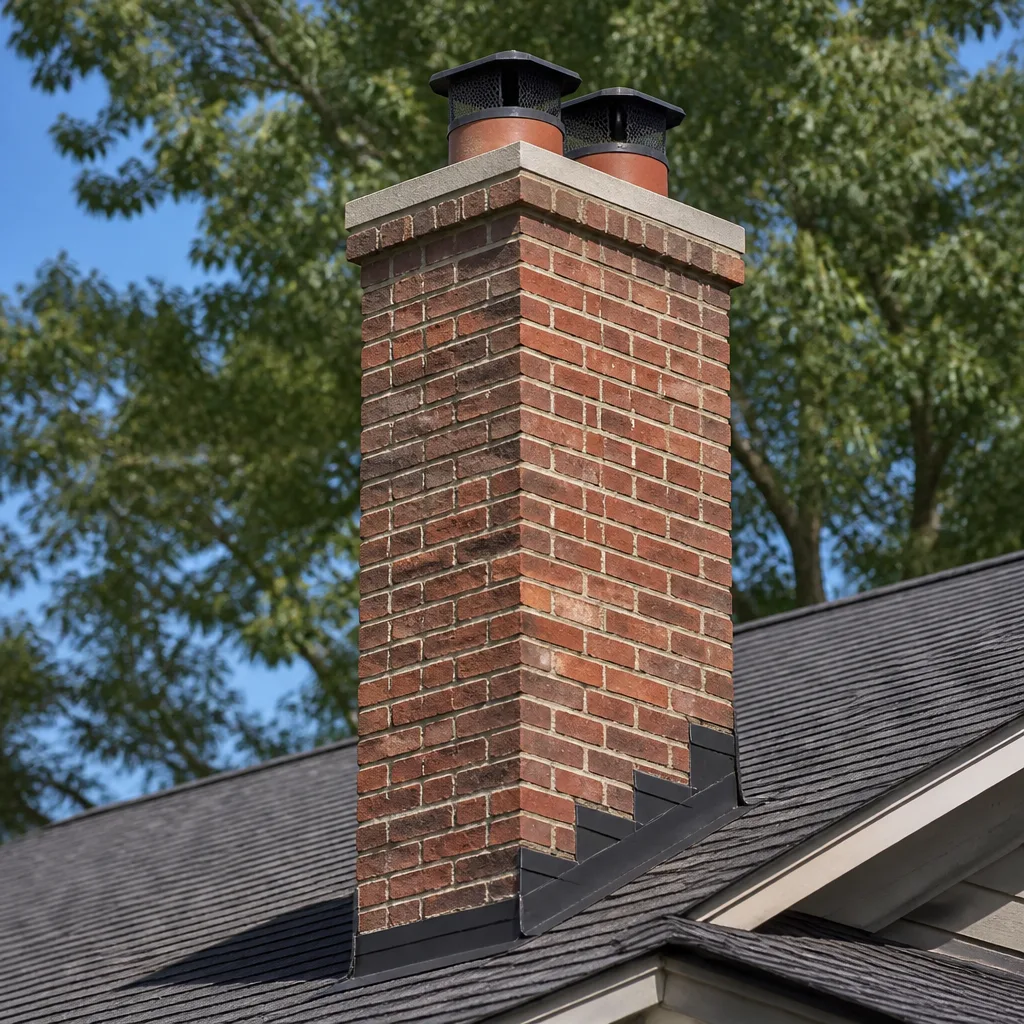
- The exterior on the roof: masonry, flashing, and chase. Brick, mortar, and flashing are checked for efflorescence, spalling, staining, and gaps. The chase is checked for cracks and water paths.
- Draft verification. The technician confirms draft is functioning as expected through the system and doesn’t show any of the rollback signs described above.
- Documentation. Every finding is photographed or recorded. The recommendation is written from those findings, not from guesswork, and it’s written so you can see what the technician saw.
That inspection is what the rest of this guide is really pointing at. When we find a problem and recommend a repair based on the camera inspection, the recommendation comes with evidence. If a finding doesn’t need to be addressed now, we say so. Sweeping, inspection, fireplace repair, chimney repair, and cap and crown work all happen as one job, so there’s a single point of accountability from the initial findings through the completed work. The parts and materials come from established chimney supply brands – Olympia Chimney, Famco, Copperfield, and DuraFlex among them – and are rated for high-temperature flue environments rather than generic hardware-store substitutes.
Common Mistakes to Avoid
- Treating efflorescence as cosmetic. It’s the most common mistake we see. The stain is a symptom of active water migration, and the fix is closing the water path, not cleaning the stain. Cleaning the stain only hides the problem until the next rain.
- Reading a single warning sign in isolation. Smoke rollback plus uneven soot patterns tells a technician far more than either alone. List every symptom you’ve noticed and let the inspection connect them. A single sign is a data point; a cluster is a diagnosis.
- Waiting for a cold snap before getting the chimney checked. Placentia doesn’t really give you a cold snap as a reminder. The late-summer heat cycle and the smell of accumulated deposit in warm weather are the local signals to act on, not the first cool evening of autumn.
- Burning soft, damp, or mixed firewood and expecting the chimney to last. Eucalyptus and other locally available hardwoods burn differently than what national guides assume. Using a moisture meter and mixing firewood loading accordingly is part of keeping the flue clean, not a separate concern.
- Hiring a sweep-only operator and thinking the job is done. A sweep cleans the flue, but the crown, cap, firebox, and liner need to be evaluated as a single system. Splitting the work between a sweep and a masonry contractor is how gaps in the inspection get missed. We handle the full scope in a single engagement so nothing between the firebox and the crown falls between two contractors.
- Assuming the cap is fine because it’s still there. Caps get bent, undersized, or improperly attached over years. A cap that isn’t sealing correctly is letting rain in, and the water damage shows up as flue and masonry problems months later.
- Not photographing before calling. The photos and descriptions are what make the first visit more efficient and the recommendation more precise. If you’re documenting for insurance, the photos from before any repair are what the claim actually needs.
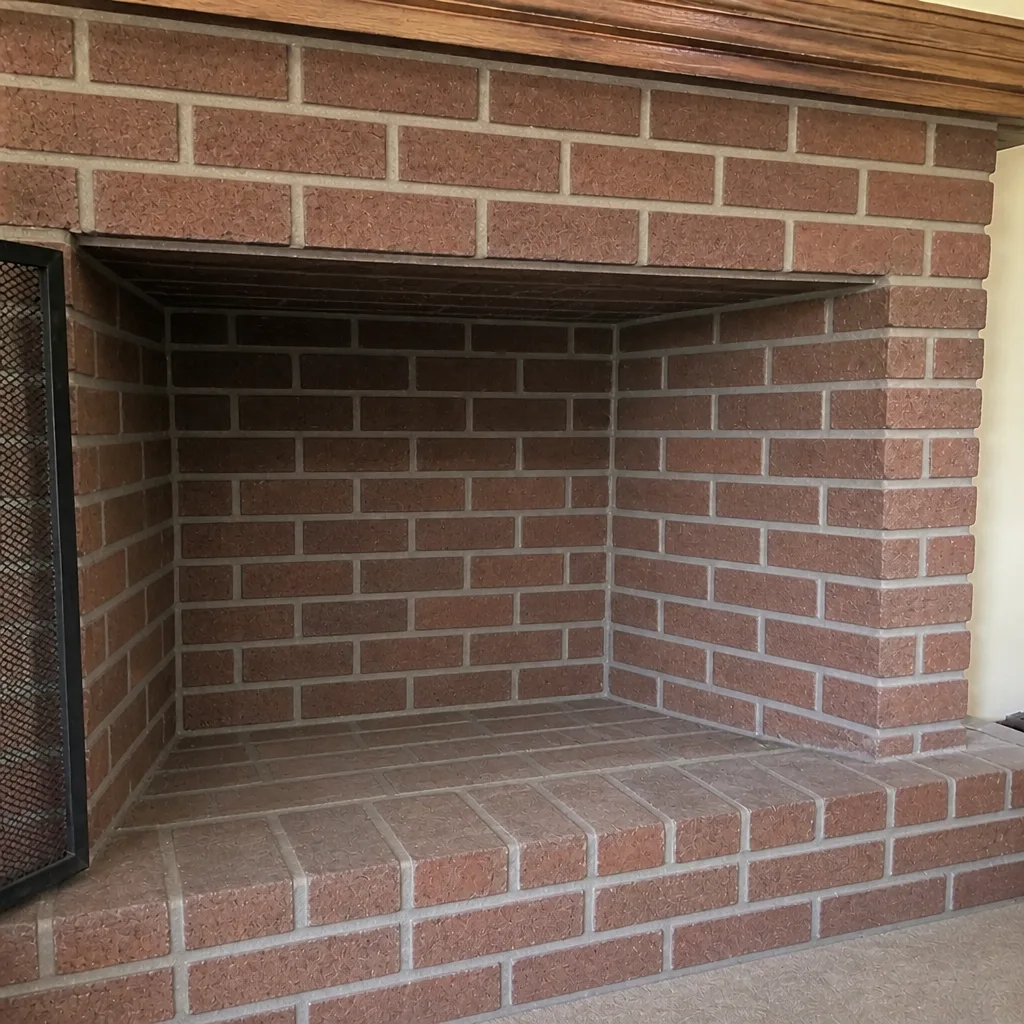
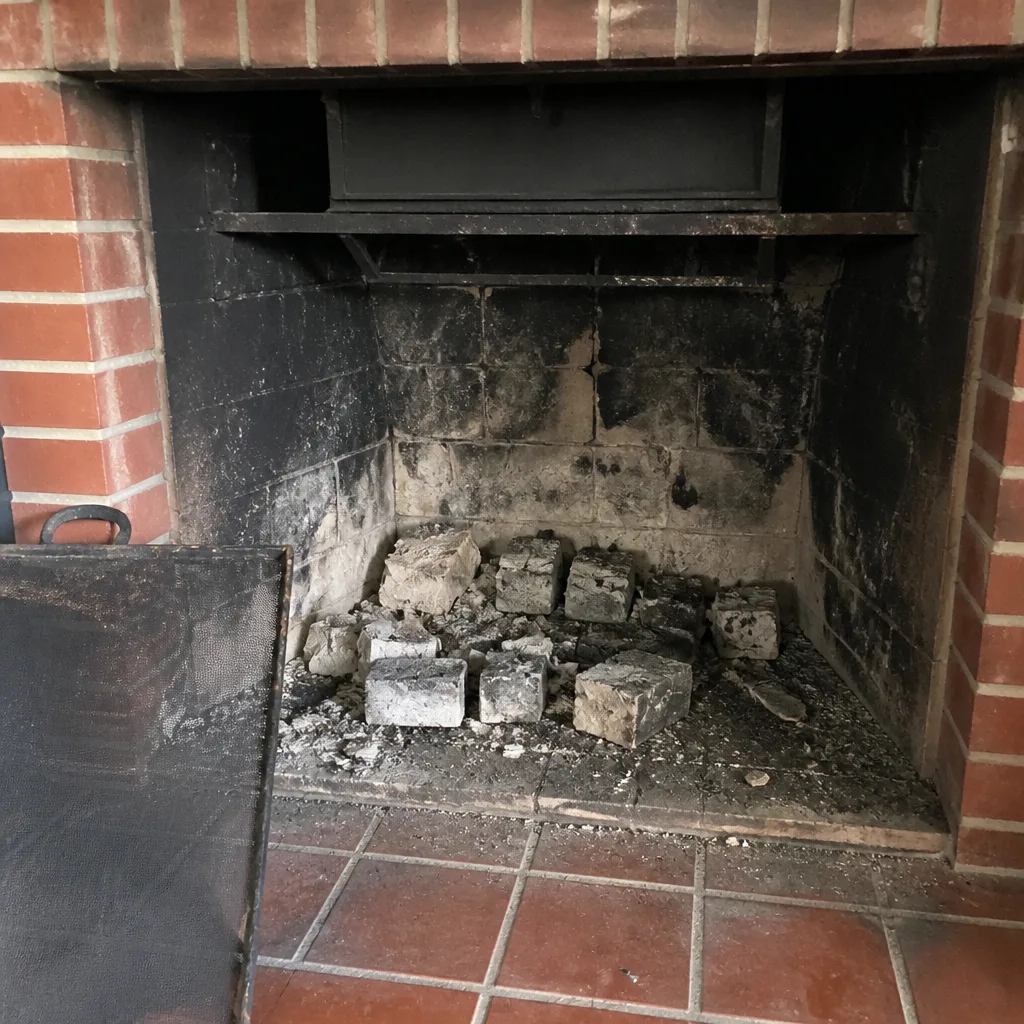
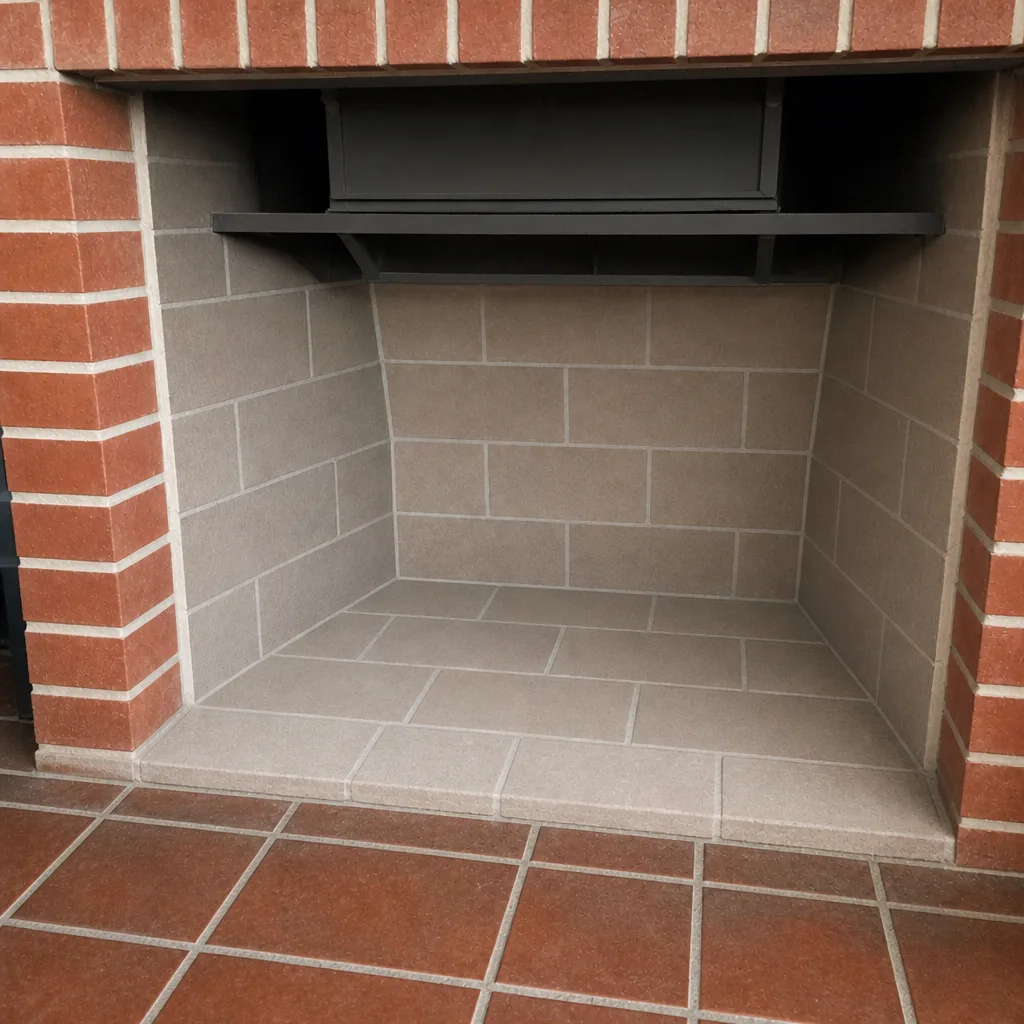
See the difference
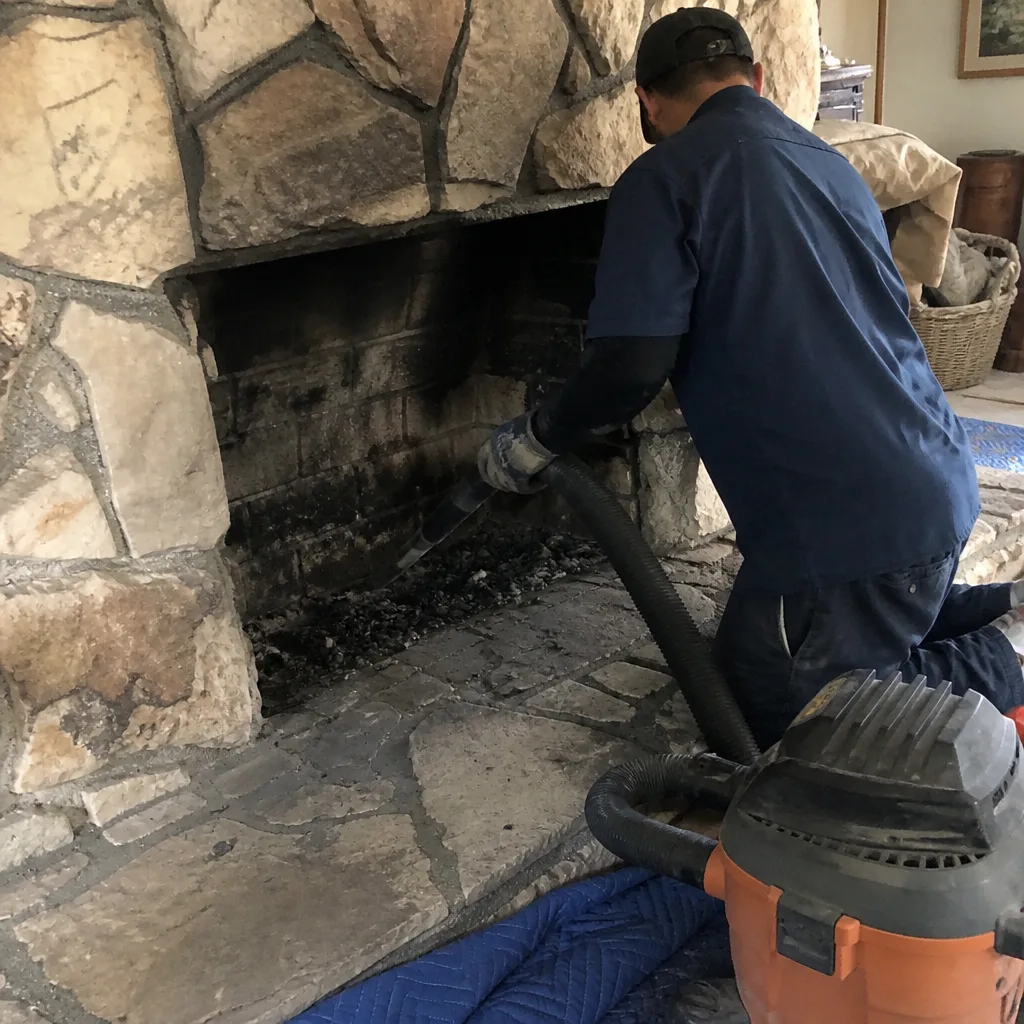 Before
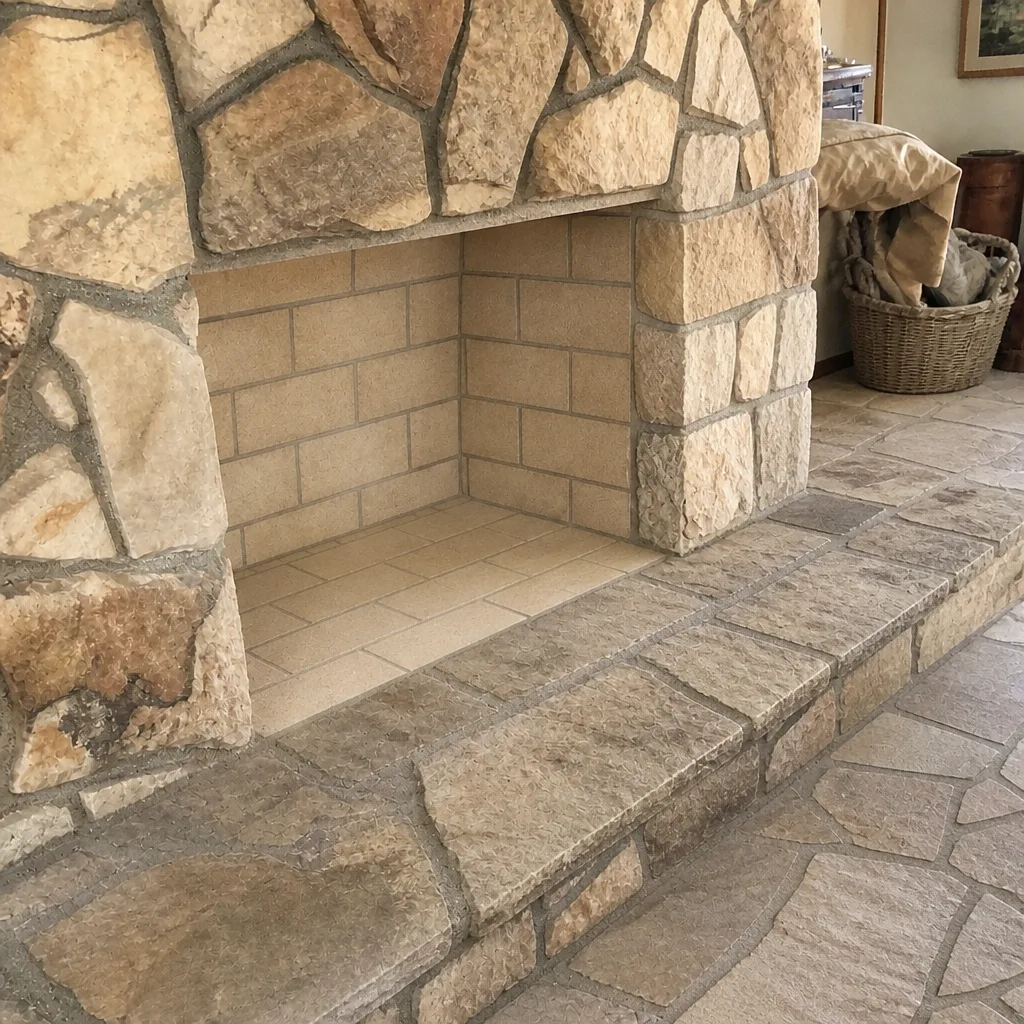 After
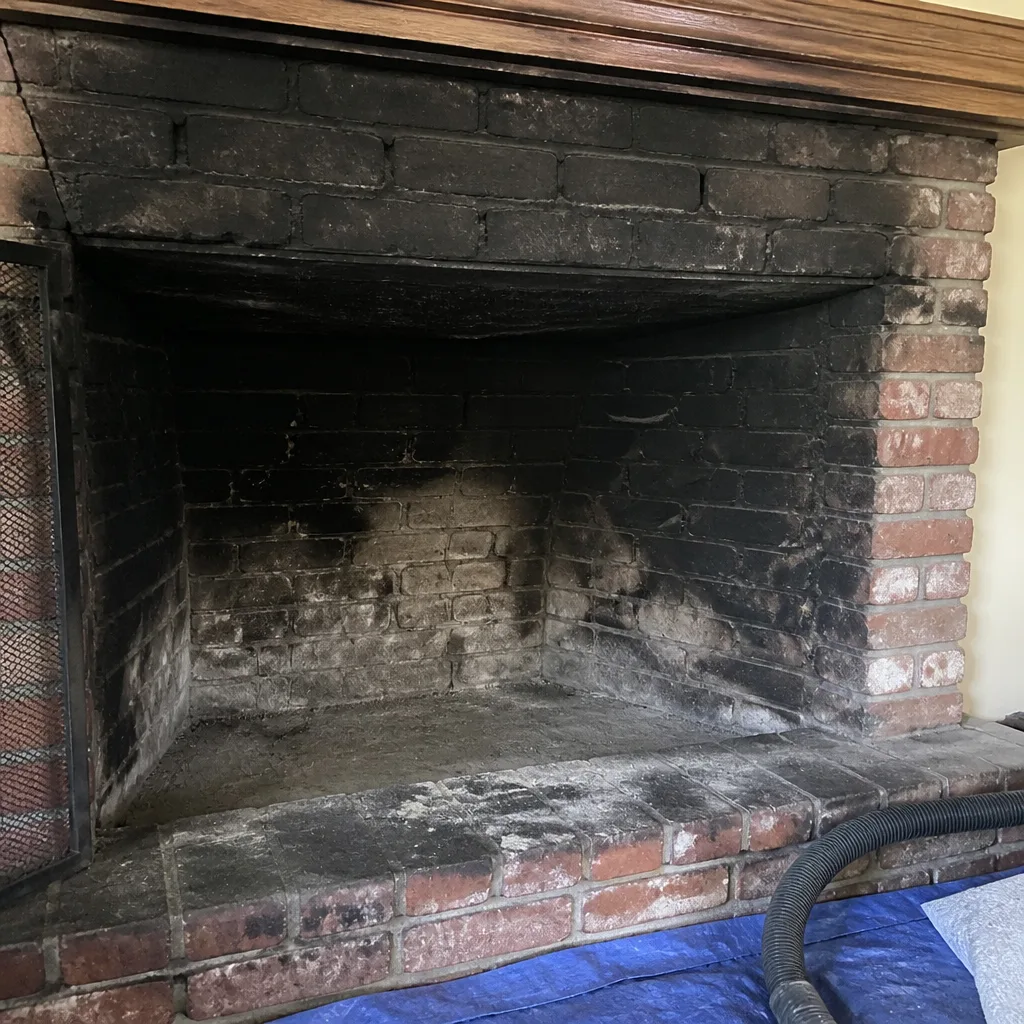 Before
 After
 Before
 After
When to Call a Professional
Call today if any of the following are true. Smoke rolls into the room on a normal fire and doesn’t clear. The carbon monoxide alarm has activated. You smell burning or creosote inside the house when the fireplace isn’t burning. You see flames or a glow at the top of the chimney. There’s visible damage to the firebox or damper that’s letting heat or exhaust past where it should go.
Call within the month if you see efflorescence, rust stains or dark streaks on the chase, spalling brick, a hairline-to-visible crack in the crown, a missing or damaged cap, uneven soot patterns in the firebox, or a draft that’s simply not what it used to be. These are deterioration trends with a service window, not a today problem, and the window is the point: repair the water path before it reaches the flue liner and the work stays small.
Call for a routine inspection as a baseline if it’s been more than a year or you’re not sure of the last sweep. Every recommendation we make follows the camera inspection, so nothing is recommended that the photos don’t show, and the recommendation states plainly when a repair can safely wait. Placentia Chimney Sweep handles the full scope in Placentia, and estimates are free. Call (866) 585-7269. We answer 24/7. Fast dispatch from 7am to 7pm, Sunday through Friday.
Frequently Asked Questions
Once a year for wood-burning fireplaces, and that’s a baseline we recommend because our climate doesn’t provide a seasonal reminder. The deposit accumulates whether or not you notice a smell, and eucalyptus-based firewood leaves harder, denser creosote than softer woods. Gas fireplaces need an inspection at the same interval even though there’s no creosote, because the venting system and the liner still age. Call (866) 585-7269 for an exact quote – estimates are free.
A liner replacement is recommended only when the camera inspection shows liner damage that a repair can’t resolve, and you should always get the photos from that inspection before agreeing to work. HeatShield ceramic flue repair can resolve some liner deficiencies short of full replacement, and DuraFlex stainless flexible liner systems are the trade-grade answer when replacement is actually needed. We don’t recommend one based on firebox appearance alone. Ask to see the photos – the inspection is what determines it. Call (866) 585-7269 – estimates are free.
Nothing, on most chimneys, most of the time. The risk is the cases that aren’t typical. Creosote deposits that go unnoticed become a fire hazard; crown or cap failures go from a small repair to masonry and liner damage as water enters the system. The point of the annual check is to catch the second category while it’s still a small repair. Call (866) 585-7269 to book an inspection – estimates are free.
No. The firebox and the flue need to be read together because they tell the same story, and a firebox that looks clean can still be pulling exhaust from a cracked liner you can’t see from the room. Uneven soot patterns tell a technician something has changed, but the camera inspection is the only way to know whether the change is draft-related or liner-related. Call (866) 585-7269 for an inspection that checks both.
Efflorescence itself isn’t dangerous, but the water migration behind it leads to damage that is. The white crust is the salt the water left behind when it evaporated; the water path that created it will keep damaging the masonry, the flue liner, and eventually the firebox if it isn’t closed off. The fix is a crown, flashing, or cap repair, not cleaning the stain. Call (866) 585-7269 to have the water path identified – estimates are free.
The daily heat swing expands and contracts the masonry, so crown cracks that look stable in spring often widen by late summer. Combined with low humidity pulling moisture out of any wet masonry quickly, the efflorescence signal appears faster after a leak starts. Late summer is a good time to have the crown and cap checked, before the first rain of autumn tests them. Call (866) 585-7269 to schedule – estimates are free.
Photograph the chimney from the ground on each visible side, plus close-ups of any crack, stain, or missing part. Photograph the firebox interior and damper with the fireplace cold and unused. Note when the smell is strongest, whether the draft behavior is new or long-standing, and when the last sweep was done. Send those notes with your call and it makes the first visit more precise. Call (866) 585-7269 – estimates are free.
The Bottom Line
Chimney warning signs are only useful if you know what they mean. Efflorescence is a water path, not a stain. Spalling is a later stage of the same water issue. Smoke rollback is a draft failure, and draft that used to be fine and isn’t anymore is a sign something inside the flue changed. Rust streaks point to moisture in the metal components. Crown and cap damage is the entry point for most of the rest. Immediate hazards (rollback, CO alarms, fire at the top of the chimney) need a call today. Deterioration trends (efflorescence, minor spalling, small crown cracks, uneven soot) have a window of weeks to months, and repairing them inside that window is what keeps the work small. Document what you see, send the photos when you call, and let the camera inspection decide the repair. A clean, code-compliant flue starts with the inspection findings, not the recommendation.
If you’ve noticed any of the signs in this guide, call (866) 585-7269 for a free estimate. We answer 24/7. Fast dispatch from 7am to 7pm, Sunday through Friday.
Written by the team at Placentia Chimney Sweep.