

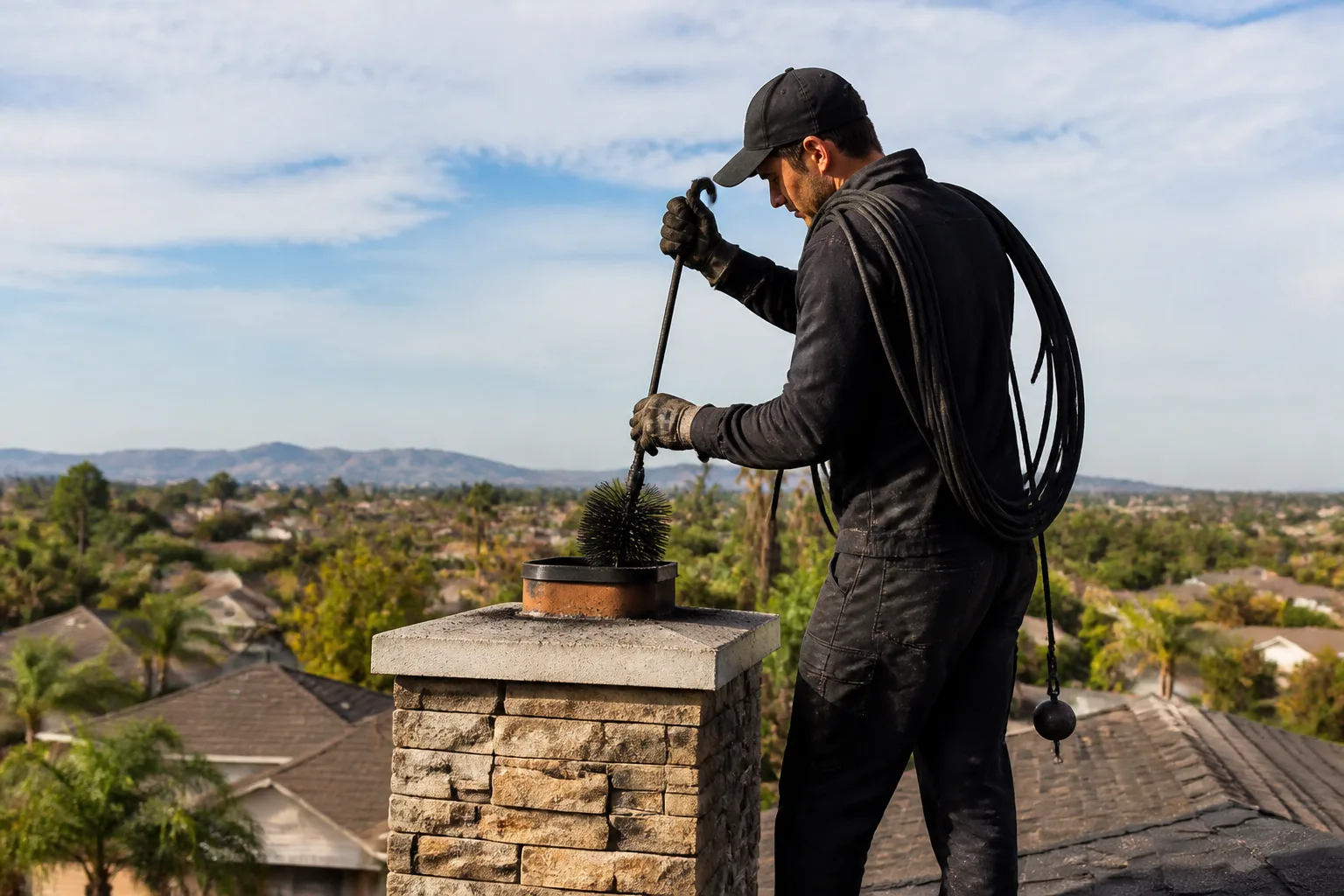
Copperfield Chimney Sweep in Placentia: A Homeowner’s Guide
The brush that scrubs your flue, the liner that carries the smoke, the cap on top, even the damper cover: each one has a brand name behind it. Most homeowners never get told what those names are, and that’s a problem when you’re trying to judge whether the parts going into your chimney are the right grade for the job. This guide is about one of those names, Copperfield, and what it actually means for a chimney sweep in Placentia. If you’d rather skip the reading and have someone look at your chimney, call (866) 585-7269 for a free estimate.
What Is Copperfield Chimney Supply, and Why Should a Placentia Homeowner Care?
Copperfield is a professional-grade chimney supply brand, not a service company. It makes and distributes the components a chimney contractor installs: flexible liners, caps, brushes, damper hardware, and the connectors that hold a flue system together. You won’t find it stocked at a hardware store shelf next to generic vent pipe. It sells through trade distributors that supply working chimney professionals, which is exactly why the name rarely reaches a homeowner.
Here’s what matters in Placentia: the parts inside a chimney live in a high-temperature, corrosive environment. Creosote, moisture, and the acidic byproducts of combustion attack metal and masonry continuously. A component rated for that environment and one that isn’t can look identical from the driveway, but they behave very differently after a few seasons of regular burning. When a sweep uses Copperfield-sourced components, it signals that the repair was built to flue standards rather than assembled from whatever was available. That distinction is the whole reason to ask about materials in the first place.
What Copperfield Products Show Up in a Placentia Chimney Job?
The components that come up most often in a typical Placentia chimney repair are the ones that handle the hottest, wettest, or most load-bearing parts of the system. Here’s how they break down:
- Flexible liners. Stainless steel liners reline a flue that’s cracked, oversized, or unlined. On a Placentia chimney, that’s often a clay-tile flue that has spalled or a fireplace insert that needs a properly sized flue. Brand and gauge matter here more than anywhere else.
- Chimney caps. The cap keeps rain, birds, and debris out of the flue. A cap is a small part with a big job. A poorly fitted cap rattles loose or rusts through, and the flue is right back to being exposed.
- Brushes and sweeping tools. Sweeping tools come in different grades of wire and different head designs. The right brush cleans without gouging a clay flue or scratching a metal one. The wrong brush can score the flue lining and create exactly the surface creosote likes to cling to.
- Damper hardware and covers. A damper that seals properly keeps conditioned air from escaping up the chimney when the fireplace is cold. A top-sealing damper does this job at the crown end of the flue, and it needs to fit the flue opening precisely to seal well.
For liner work we install DuraFlex stainless flexible liner systems, a trade-standard brand. For flue resurfacing we apply HeatShield ceramic repair, which lets us restore a damaged flue without a full reline when the flue condition allows. Those are the same kinds of professional materials an experienced chimney contractor sources from industry distributors.
Professional-Grade Supply vs. Big-Box Alternatives: What Actually Differs?
When you compare professional-grade components to general hardware-store substitutes, the differences show up in three places: metal gauge, warranty terms, and how precisely the parts fit the flue they’re going into. None of those differences is visible from the outside, which is why they’re so easy to skip over.
- Gauge. A liner or cap built from a thinner metal stock will still pass a casual look. What it won’t do is hold up to years of heat cycling and moisture. A professional-grade component is thicker and rated for continuous flue temperatures. Generic substitutes often aren’t rated for that at all.
- Warranty terms. Trade-grade products come with manufacturer warranties that assume the part was professionally installed and sized correctly. That matters if the component ever fails. A hardware-store substitute usually carries no such coverage for flue use.
- Fit tolerance. Chimneys are not standard. A cap that’s a quarter inch too loose doesn’t seal. A liner that’s the wrong diameter drafts poorly or doesn’t fit the flue at all. Professional supply lines offer a range of sizes and connector types so the part is matched to the flue, not forced onto it.
In our experience in Placentia, most pre-existing chimney problems we get called out to trace back to a component that was installed with the wrong material grade or the wrong fit. That’s the single most common explanation for a repair that never really took.
How Quality Materials Change the Inspection-to-Repair Workflow
Using the right materials does more than produce a durable repair. It changes how the whole job runs. An inspection produces findings. Findings produce a recommendation. Materials on the truck (so to speak) determine whether that recommendation can be executed correctly. When a sweep is working with professional-grade components, the recommendation can be specific, matched to the flue, and completed without a second visit or a substitute part.
That workflow leads to cleaner results. A properly sized cap fits the first time. A liner that’s spec’d to the flue sizes cleanly and drafts predictably. It also leads to better documentation: we can tell you exactly which brand and model went into your flue, which makes future inspections easier and gives any future scope of work a hard fact to work from instead of a memory. And it leads to fewer callbacks, because the fix holds. In Placentia, where the summer heat bakes the chase and the burning season brings real creosote load, a first-time-right repair is the only one that makes sense.
One crew, full chimney: chimney sweep, inspection, fireplace repair, and chimney repair are all handled under one contractor. You get a single point of accountability from findings through finished work, and nothing gets subcontracted out to an operator who might not know where the flue ended up.
What Materials Questions Should You Ask After a Service Call?
The single best question to ask after any chimney service is: what brand and model was installed, and where does it go in the system? “We replaced the liner” isn’t a material answer. Here’s a short list to carry with you:
- What’s the brand and model of the liner? A professional-grade brand with a known gauge and a rated temperature is the right answer. A trade name you can’t look up is not.
- What’s the crown and cap made of, and how is the cap attached? Caps are the most common spot for a shortcut. Adhesive-secured caps come off; bolted or properly anchored caps stay.
- If the flue was resurfaced, what product was applied? Ceramic resurfacing products are a specific category. Ask which one was used and whether the flue condition supported resurfacing or required a full reline.
- What documentation comes with the work? A photo report of the flue before and after is a reasonable expectation from an inspection-first workflow.
- Is the material rated for the flue environment? Liner and connector components should be rated for continuous high-temperature exposure. Generic substitutes often aren’t.
If a technician can answer these, you’re dealing with someone who takes material choice seriously. If they can’t, that’s information too.
When to Call a Pro
Some chimney maintenance is a phone call, and some of it genuinely isn’t a DIY job. High-tension components inside the chimney, gas connections, and any work inside a flue are all areas where the right move is to have a trained professional handle it. If you notice a smoky firebox, staining on the chase, visible crown cracking, or a missing or damaged cap, those are inspection triggers. If you smell gas around a gas fireplace, treat that as a call-your-provider situation first.
Routine sweeping itself is a professional task when the flue is anything other than a straight, clean, easily accessed run. For every other repair, bring in a trained technician. If you’re in Placentia and want to know where your chimney actually stands, we offer a free estimate. Call (866) 585-7269. We answer 24/7. Fast dispatch from 7am to 7pm, Sunday through Friday.
The Bottom Line
Material brand matters because the parts inside a chimney are doing hard work in a hostile environment, and the difference between a professional-grade component and a hardware-store substitute is invisible from the outside. Ask what brand and model goes into your flue, ask what gauge and rated temperature it carries, and ask for documentation. If you’re in Placentia and need help, Placentia Chimney Sweep offers free estimates. Call (866) 585-7269. We answer 24/7. Fast dispatch from 7am to 7pm, Sunday through Friday.
Frequently Asked Questions
Copperfield is a professional-grade chimney supply brand, not a service company. It makes components a chimney contractor installs: flexible liners, caps, brushes, damper hardware, and connectors. It’s sold through trade distributors, which is why most homeowners have never heard the name until they start asking which brand went into their flue. Call (866) 585-7269 if you want to know exactly what’s in your chimney.
Yes. Liner brand tells you the gauge of the metal, the rated continuous temperature, and the warranty terms. A generic substitute may be thinner, unrated for continuous flue exposure, and not covered for flue use. When we install a liner, we use DuraFlex stainless flexible liner systems, a trade-standard brand, because the material grade is the reason a liner lasts. Call (866) 585-7269 for a free estimate.
Often, yes. We apply HeatShield ceramic flue repair, which can restore a damaged flue without a full liner replacement when the flue condition allows. Not every flue qualifies: a badly compromised flue still needs a liner, and we’ll say so when that’s the finding. The inspection tells you which path is right for your flue. Call (866) 585-7269 to book an inspection.
The common guidance is once a year for a chimney that sees regular use, and sooner if you’re burning a lot of softwood or noticing smoke backing up. A sweep is also the right time to check the crown, cap, and damper. If it’s been more than a year, or you can’t remember the last time, an inspection is the starting point. Call (866) 585-7269 for a free estimate.
Written by the team at Placentia Chimney Sweep.
Need Chimney Cleaning Help?
Call Placentia Chimney Sweep - the local pro we connect you with is licensed and insured, here with fast help in Placentia.
(866) 585-7269