
Chimney Sweep: Repair or Replace? How Placentia Homeowners Decide
Replacing a chimney cap when the real failure is a cracked smoke chamber is like painting over a water stain without fixing the pipe. The problem comes back, and next time it’s bigger. The repair-or-replace question on a Placentia chimney isn’t one decision anyway. Your chimney is several components stacked into one system, and each part has its own failure threshold. Work out which component is actually failing, what caused it, and whether a repair addresses the root cause or just the surface.
If you’d rather have a trained eye on it than a ladder and a flashlight, call (866) 585-7269. We answer 24/7. Fast dispatch from 7am to 7pm, Sunday through Friday, and estimates are free.
Why “Repair or Replace?” Is the Wrong Question
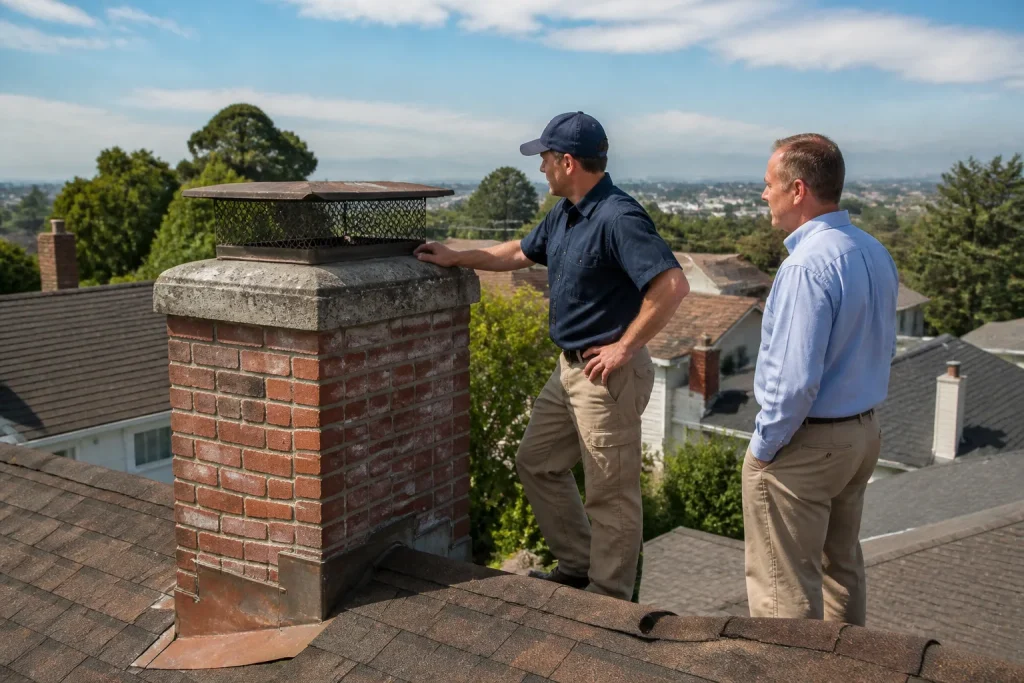
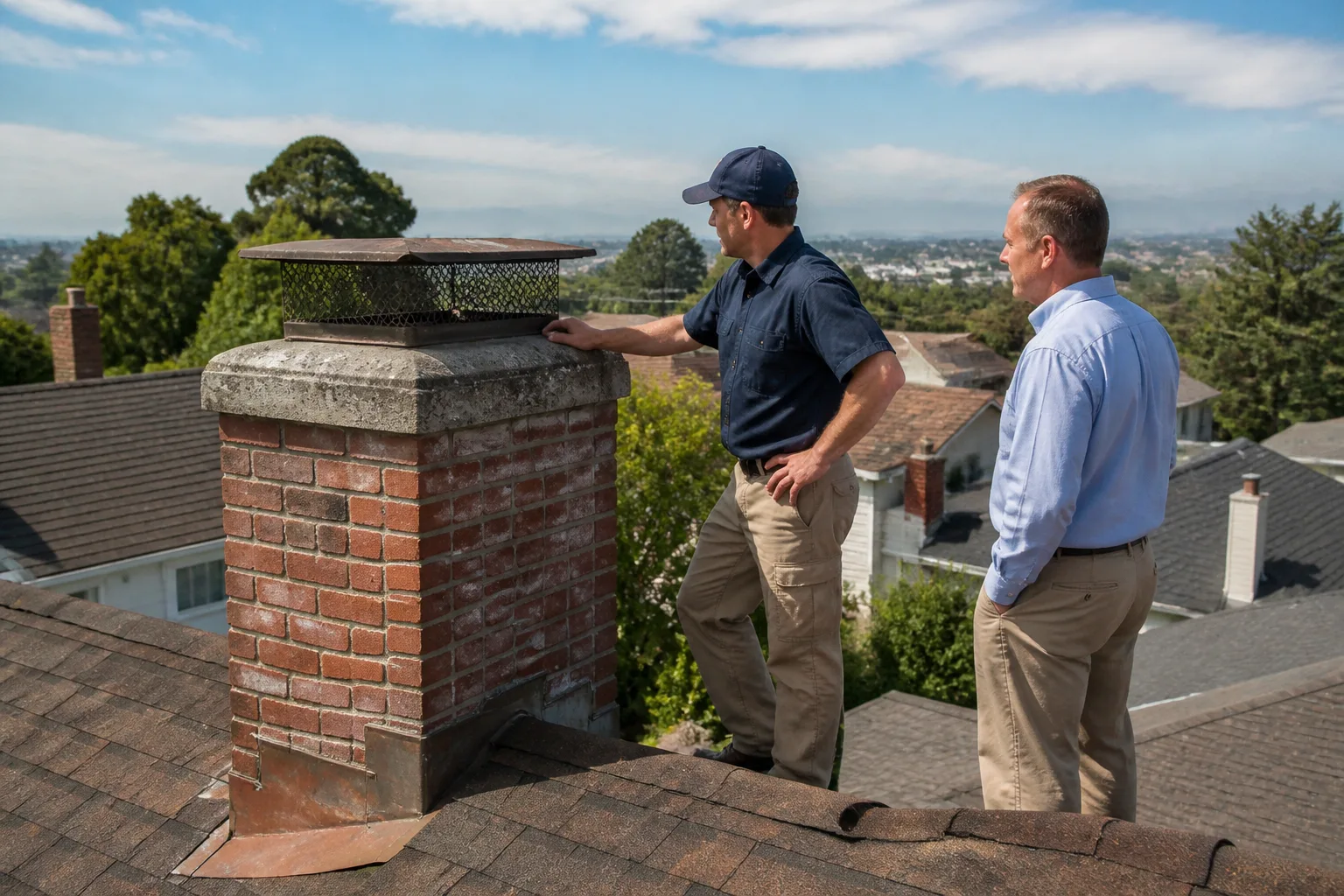
Homeowners in Placentia tend to ask whether the whole chimney needs replacing, and the honest answer is almost never yes for the whole structure. The real question is component-specific: which part failed, how badly, and what caused it. A crown that has hairline surface checking is a repairable cosmetic problem. A crown that has separated from the flue and is letting water behind the masonry is a structural repair before it becomes a rebuild.
In our experience, this is where a lot of bad recommendations start. Someone looks at a chimney from the ground, sees staining on the chase, and quotes a full reline. The stain might be a failing cap, a missing rain cover, or water tracking down a hairline crown crack. All three are fixed at the top of the chimney, not the bottom.
Here’s the decision model we use. Break the chimney into six parts, and evaluate each one on its own:
- Crown – the sloped concrete cap at the top that sheds water
- Cap – the metal hood over the flue that keeps rain and animals out
- Flue liner – the internal conduit that carries smoke and gases up and out
- Smoke chamber – the sloped transition above the firebox that guides smoke into the flue
- Firebox – the firebrick box where the fire actually burns
- Exterior masonry – the brick and mortar on the outside of the chase
Each one has a repair threshold and a replace threshold, and they don’t overlap. That’s the entire decision, done properly.
Component-by-Component: Repair or Replace?
A chimney crown with surface hairline cracks is repairable. A crown that is separated, crumbling at the edges, or holding water behind it is a rebuild of that component, not a patch. The cap is the cheapest component on the chimney to replace and the one most often deferred too long, because it’s out of sight. The liner is the one where “repair” is a real question, and the answer depends on the type of damage.
Use this as a working table:
- Crown: repairable for surface checking and minor cracking. Replace or rebuild when the crown has pulled away from the flue, is spalling, or is clearly letting water behind the masonry.
- Cap: replace, essentially always. Caps are inexpensive and they fail by rust, impact, or a missing animal screen. There is rarely a reason to repair one.
- Flue liner: repair with ceramic resurfacing where the liner has gaps, cracking, or efflorescence but the surrounding structure is sound. Replace with a stainless flexible liner where a section is fully dislodged, where the liner is missing entirely, or where a change in appliance demands a correctly sized new flue.
- Smoke chamber: repair with ceramic resurfacing when the chamber is rough, pitted, or has minor cracking. Rebuild when the chamber has lost its slope or has structural separation from the firebox.
- Firebox: repoint or replace individual firebricks where a few are spalled or the joints are open. Rebuild the firebox where the brick face has eroded through or the box has lost structural integrity.
- Exterior masonry: repoint (tuckpoint) where mortar joints are eroded but the brick face is intact. Rebuild a section where the brick face is spalling or the chase has moved.
The pattern worth internalizing: masonry failures tend to be repairable, and structural movement is not. A chimney in Placentia that has settled or separated is telling you something different from a chimney that has simply dried out.
What the Southern California Climate Does to Your Chimney
Chimney repair timelines written for the Midwest and Northeast don’t apply here. Those climates put a chimney through repeated freeze-thaw cycles, where water gets into mortar joints, freezes, expands, and gradually breaks the masonry apart. Placentia doesn’t get that. Winters are mild. What we do get is dry heat and seismic activity, and those cause a different failure pattern.
Dry heat pulls moisture out of masonry and mortar, and that causes surface spalling and shrinkage cracking more than the deep frost damage seen in cold climates. On the other hand, the sun-facing side of a chase dries much faster than the shaded side, and that gradient is what produces the hairline cracking you see on many Placentia crowns. A homeowner who lived in the Midwest for years and is used to replacing a crown every twenty years might find the Placentia crown needs attention in a shorter timeframe – not because the materials are worse, but because the exposure pattern is different.
Seismic activity is the other Placentia-specific factor. Chimneys are tall, slender, and rigidly connected to the house. When the ground moves, the chimney is one of the first things to show it. Hairline cracks that appear after a noticeable quake aren’t necessarily urgent, but they should be documented on inspection, because a hairline crack that grows is a different repair than a crack that’s stable.
A Level 2 inspection, typically done with a camera, catches both patterns. That’s the point of inspection before recommendation: findings first, quote second.
Heads or Tails: HeatShield Smoke Chamber Repair vs. Full Rebuild
This is where the honest cost difference between repair and replacement gets interesting. A rough, pitted, or partially cracked smoke chamber is the classic case for HeatShield ceramic flue repair. The chamber is resurfaced from the inside, building back a smooth, correctly sloped surface that guides smoke up into the flue. The existing structure stays in place. A full smoke chamber rebuild means demolishing and rebuilding the chamber from the firebox up.
HeatShield resurfacing is the right call when the chamber is structurally sound but its surface is failing. A rough smoke chamber causes smoky fires, and the fix isn’t a bigger flue, it’s a smoother chamber. Resurfacing addresses the actual cause.
A full chamber rebuild is justified when the chamber has lost its slope toward the flue, when the chamber has separated from the firebox, or when the damage is so extensive that resurfacing wouldn’t have sound material to bond to. A rebuild is a masonry job. Resurfacing is not, and that’s the reason many sweep-only operators don’t offer it. They’ll recommend the rebuild because it’s the only option in their toolbox.
Ask specifically whether HeatShield resurfacing is an option, and get the answer on paper. It’s a legitimate trade-grade repair, and it sits cleanly between cosmetic patching and full reconstruction.
Reading a Level 2 Inspection Report Without Getting Snowed
A Level 2 inspection report is the single most useful document in the whole repair-or-replace decision, and it’s also the one most likely to be misread. The word “deterioration” and the phrase “structural compromise” mean very different things, and they call for different actions.
Here’s the practical distinction:
- Deterioration means the surface or the material has begun to fail. Cracking, spalling, efflorescence, open mortar joints, and rusted components are all deterioration. Much of it can be repaired, and some of it can safely wait. A report flagging surface deterioration on a crown, with no evidence of water intrusion, is telling you what to watch, not what to rebuild.
- Structural compromise means the chimney is no longer doing one of its jobs safely. A dislodged flue liner section, a separated smoke chamber, a chimney pulling away from the house, or a chase that has shifted are structural compromises. These are safety and insurability issues, not maintenance items. They need action, and often they need it before the next fire.
Ask for camera evidence and a photo report on anything flagged as structural. Nothing we recommend is put forward without visible evidence you can look at yourself, and we’ll say plainly when a repair can safely wait. That’s the standard you should hold any contractor to.
Insurance and Resale: Why a Documented Repair Is Worth More
A chimney contractor who repairs your system with documented, named materials gives you something a sweep-only crew’s verbal “all clear” doesn’t: a paper trail that stands up when an insurer or a buyer’s inspector asks questions. In Placentia, where homes change hands and insurers tighten requirements, that record matters.
When we install a DuraFlex stainless flexible liner or apply HeatShield ceramic resurfacing, the paperwork names the material and the scope of work. That’s not marketing. It’s the difference between a documented repair and an unverifiable one. The materials come from trade-standard suppliers including DuraFlex, HeatShield, Gelco, Olympia Chimney, Famco, and Copperfield, and they’re rated for high-temperature flue environments rather than being generic hardware-store substitutes.
On a resale, a written repair record with a credentialed company behind it answers three questions a buyer’s inspector will ask: what was wrong, what was done, and what product was used. A verbal “it’s fine” answers none of them. Whether it holds up for insurance purposes depends on your insurer’s requirements, so check those directly, but a documented repair with named code-compliant materials is a much stronger position than a verbal clearance.
We cover the full system in one engagement: chimney sweep, chimney inspection, fireplace repair, chimney repair, and chimney cap and crown. That means one point of accountability from the inspection findings through the completed repair, rather than passing you between three contractors. If you’re in Placentia, our Placentia Chimney Sweep overview, and the specifics on chimney sweep, fireplace repair, and chimney repair, are the right places to start.
The Bottom Line
Repair or replace isn’t one decision, it’s six. Break the chimney into its components, evaluate each on its own, and let a documented inspection report drive every recommendation. Masonry failures are usually repairable. Structural movement is not. And in Placentia, where dry heat and seismic activity shape the failure pattern differently than in colder parts of the country, a local inspection beats a timeline copied from the Midwest.
If you notice a smoky firebox, crown cracking, a missing cap, or staining on the chase, that’s reason enough to have it looked at. If you’re in Placentia and need help, Placentia Chimney Sweep offers free estimates – call (866) 585-7269. We answer 24/7. Fast dispatch from 7am to 7pm, Sunday through Friday.
Frequently Asked Questions
Not always. Many failing liners can be repaired with HeatShield ceramic resurfacing when the surrounding structure is sound and the damage is limited to gaps, cracking, or efflorescence. A full DuraFlex stainless flexible liner is the right call when a section is fully dislodged, when the liner is missing, or when a change in appliance demands a correctly sized new flue. The determination should come from a Level 2 inspection report, not a guess from the ground. Call (866) 585-7269 for an exact quote – estimates are free.
Skipping maintenance doesn’t usually produce a single dramatic failure. It produces a slow pattern of small failures stacking up: a crown crack letting water in, mortar joints eroding, a cap rusting through, and eventually water reaching interior structure or a liner that no longer qualifies as code-compliant. Carbon monoxide risk is real when a flue is compromised, and chimney fires can start in heavy creosote buildup even in a mild-climate Placentia chimney. The fix is cheaper earlier. Call (866) 585-7269 for an exact quote – estimates are free.
Most chimney care guides are written for cold climates where freeze-thaw cycles dominate the failure pattern. Placentia’s dry heat and seismic activity cause a different pattern: surface spalling, shrinkage cracking on sun-facing surfaces, and hairline cracks that appear after earth movement. A chimney here needs a local eye, not a calendar rule of thumb. Call (866) 585-7269 for a free estimate if you’d like a proper inspection.
HeatShield ceramic resurfacing handles rough, pitted, or partially cracked smoke chambers when the structure is sound. A full rebuild is justified when the chamber has lost its slope, has separated from the firebox, or the damage is too extensive for resurfacing to bond. Resurfacing is a real alternative to a rebuild, and it’s the kind of work many sweep-only crews can’t perform. Call (866) 585-7269 for an exact quote – estimates are free.
Our technicians have up to 14 years of experience, and the local professionals we connect you with are licensed and insured as their state requires. Call (866) 585-7269. We answer 24/7. Fast dispatch from 7am to 7pm, Sunday through Friday.
Written by the team at Placentia Chimney Sweep.
Need Chimney Cleaning Help?
Call Placentia Chimney Sweep - the local pro we connect you with is licensed and insured, here with fast help in Placentia.
(866) 585-7269